The Liberal Arts Degree Is My Best AI Skill
June 29, 2026
Sean Hollender, MBA, MS-CIS, PMP
For years the message was clear: STEM is the only path that matters. But I use AI every single day, and the part of my education paying the biggest dividends isn't the engineering. It's the liberal arts degree I earned at Hendrix.
A degree in learning how to learn
A liberal arts education isn't just learning facts. It's learning how to learn — how to explore an unfamiliar idea and synthesize science, literature, art, humanities, and language into one way of understanding the world.
I studied German at Hendrix. I never spoke it fluently, and I never used it. But I learned how to acquire a language, how to think and breathe inside one. So when I went to Japan to teach, I already had the tools. I didn't learn Japanese in college, yet college is exactly why I could.
That is the same skill AI rewards now: not knowing the answer, but knowing how to go find it.
Why curiosity beats code
Working with strong tools like Claude rarely fails on technical depth. It fails on the questions you do or don't think to ask. The work is critical, not procedural:
• Be precise about what you want, and clear about what you don't
• Stay skeptical of what comes back and review it hard
• Iterate until the output is genuinely stunning, not just done
People I see struggle aren't short on engineering. They're short on curiosity. They don't ask "could this happen?" or "is it possible to do this?" A code-only mindset isn't enough anymore. The strongest question is simply "can I do this?" — then exploring until you know.
The science still helps
This isn't a case against engineering. Knowing software should be documented, tested, scalable, redundant, and version-controlled still matters. But that knowledge is the floor, not the ceiling. It's the curiosity and judgment on top of it that produce something worth shipping.
Why it matters
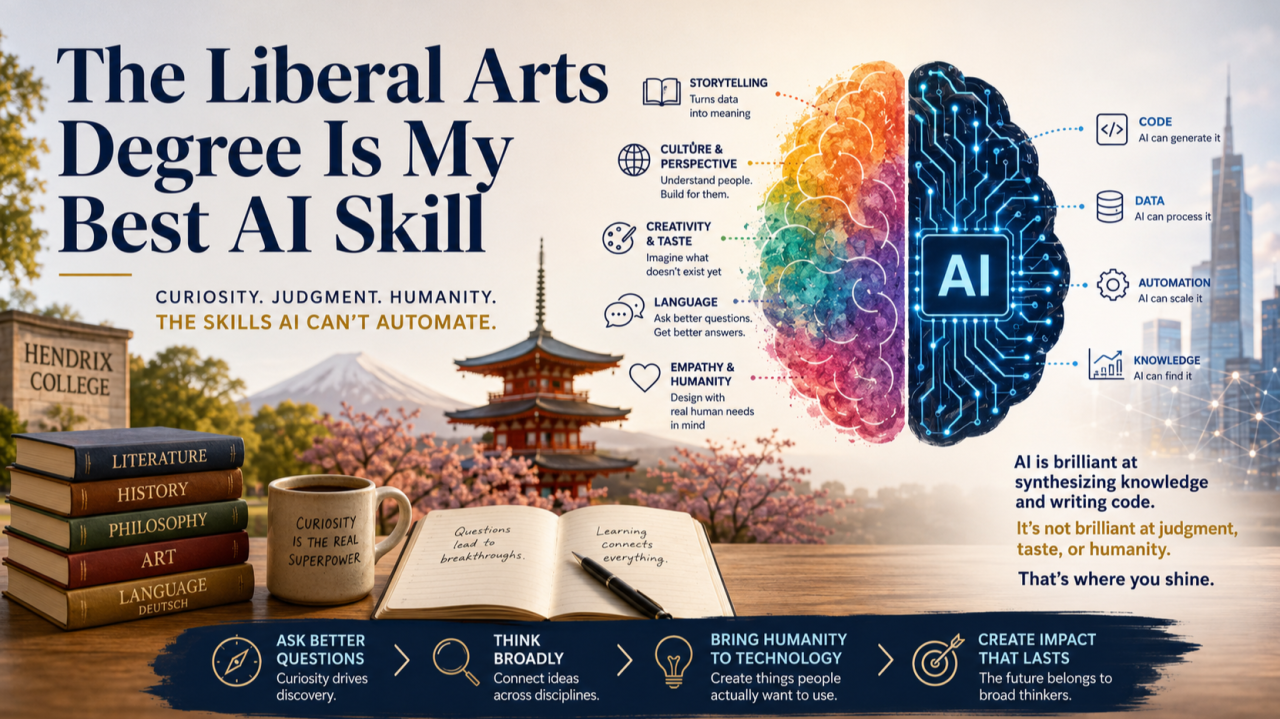
AI can do everything, which means you suddenly own everything: interface, backend, usability, product, imagination, marketing. Pulling that off takes range. You have to know style, know how a customer feels, think in a humanities way. AI is brilliant at synthesizing huge bodies of knowledge and at the coding. It does not shine at creativity, taste, or judgment. That gap is where the humanities live.
When AI is misused, it's because that judgment is missing. Science plus AI alone feels cold and pushes people away. Science met with the humanities makes something human — something people actually want to use.
Takeaway
The future doesn't belong to the deepest specialist. It belongs to the broadest thinker who can ask the right questions, exercise taste, and bring science and humanity together.
Were you told to skip the liberal arts for something "practical"? How is that bet looking now?